

Choosing the right Outdoor Heater isn’t just about heat output. The best units combine performance, control, safety, and installation flexibility. Whether for residential patios or commercial venues, understanding the key features helps ensure long-term satisfaction and efficiency.
1. Heat Output and Coverage
Start with the basics, how much heat you actually need.
Electric heaters are ideal for targeted, consistent warmth and are well suited to covered or semi-enclosed areas.
Look for:
- Wattage (electric)
- Coverage area in square metres
- Directional heat vs ambient heat
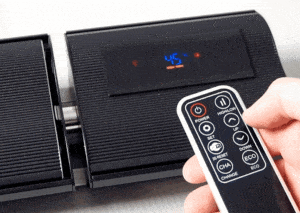
2. Is a Remote Control Necessary?
A remote isn’t essential, but it adds convenience.
- It allows users to adjust heat or switch the unit on/off without getting up
- Particularly useful for ceiling or wall-mounted heaters
- Ideal in commercial settings where staff manage multiple heaters
Many modern units include remotes, but it’s a “nice to have” rather than a must-have feature.
3. Do You Need a Timer?
Timers are not mandatory, but they are highly recommended.
- They automatically switch heaters off after a set time
- Reduce energy waste and running costs
- Improve safety by preventing heaters being left on unintentionally
4. Thermostat vs Manual Control
Outdoor Heaters don’t always need a thermostat, but it depends on the application.
- Thermostats regulate temperature automatically, maintaining consistent comfort
- Manual controls are simpler and more common in outdoor settings
For open-air environments, thermostats are less critical because heat dissipates quickly. However, in semi-enclosed spaces, they can improve efficiency and comfort.
5. Adjustable Heat Levels
This is one of the most important features to look for.
- Allows users to adapt heat output to weather conditions
- Prevents overheating in mild conditions
- Improves energy efficiency
Some Outdoor Heaters only offer a single heat setting, which can be limiting depending on distance and usage.
6. Mounting Options
The right mounting option depends on your space and usage.
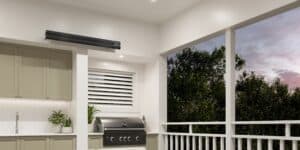
Wall-mounted
- Saves floor space
- Ideal for patios and alfresco areas
- Fixed directional heat
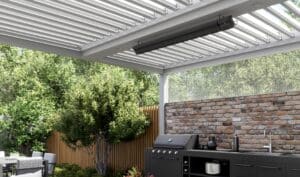
Ceiling-mounted
- Best for large areas or commercial settings
- Keeps heaters out of reach
- Requires careful planning for clearance and wiring
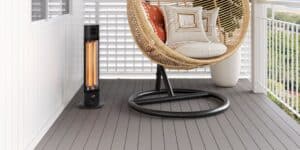
Freestanding
- Portable and flexible
- Great for temporary or residential use
7. Safety Features to Look For
Safety should never be overlooked.
Look for:
- Overheat protection
- Tip-over shut-off (freestanding units)
- Weather resistance (IP rating for outdoor use)
- Certified electrical components
Electric heaters should always be installed correctly and connected to appropriate outlets to avoid overheating risks.
8. Weather Resistance and Durability
Outdoor Heaters must withstand the elements.
Consider:
- Corrosion-resistant materials (e.g. stainless steel or aluminium)
- Suitable IP rating for outdoor exposure
- Protective covers if installed in exposed areas
Final Thoughts
The right Outdoor Heater is a balance of heat output, control features, mounting style, and safety.
For most applications:
- Adjustable heat and a timer are highly valuable
- A remote adds convenience but isn’t essential
- Mounting and placement should be planned carefully from the start